Learn NGS: Advanced Next Generation Sequencing Courses at IESR
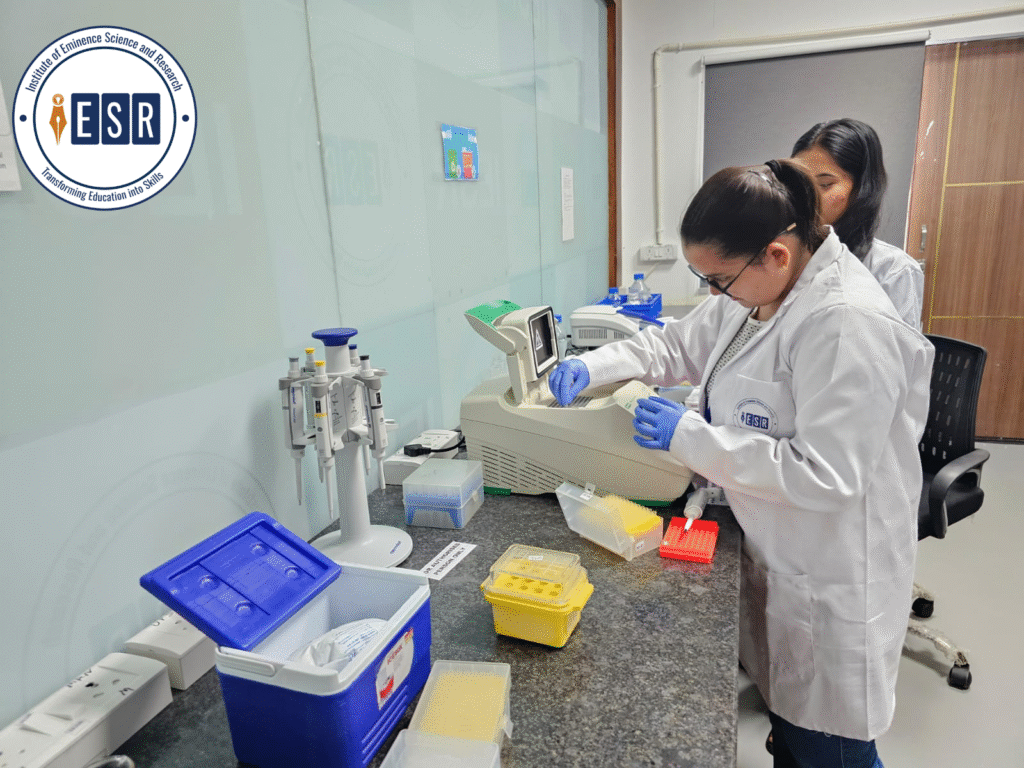
Introduction to Next Generation Sequencing (NGS)
Have you ever wondered how scientists decode the secrets hidden in our DNA? That’s exactly what Next Generation Sequencing (NGS) does. It’s a powerful technology that enables researchers to study genes at an unprecedented speed and accuracy.
At its core, NGS has transformed life sciences, medicine, agriculture, and even forensic studies. From diagnosing genetic disorders to developing personalized treatments, NGS is at the heart of modern research.
Why Learn NGS Today?
Growing Demand in Healthcare & Genomics
The healthcare industry is rapidly adopting NGS for disease detection, cancer genomics, and genetic counseling. As the demand grows, so does the need for trained experts.
Career Opportunities in NGS
Companies worldwide are hiring professionals skilled in sequencing, Data Analysis ,(bioinformatics). By learning NGS, you can enter industries like biotechnology, pharmaceuticals, diagnostics, agri genomics, Clinical genomics and research labs, healthcare, where it aids in diagnostics, cancer research, and personalized medicine; agriculture, for crop and livestock breeding and genetic analysis; the food industry, ensuring safety and authenticity by detecting contaminants and ingredient substitutions; and microbiology, discovering new antibiotics, understanding microbial communities, and tracking infectious diseases.
How NGS Skills Give You an Edge
Unlike traditional molecular biology skills, NGS expertise opens doors to cutting-edge research projects and high-paying roles.
About IESR – Institute of Emerging Scientific Research
Who We Are
IESR is one of India’s leading scientific upskilling/internship institutes, offering industry-driven courses in emerging fields like genomics, NGS hands-on & analysis, data science, and forensic science etc.,
Why Choose IESR for NGS Training?
Industry-Oriented Curriculum
Our courses are designed in line with current research and industry demands.
Hands-On Learning with Real Case Studies
We emphasize practical training with lab experiments and sequencing projects.
Experienced Faculty & Mentors
Learn from scientists and industry experts who bring real-world insights to the classroom.
Advanced NGS Courses Offered at IESR
- Beginner-Friendly NGS Training – Perfect for life science students just stepping into genomics.
- Advanced NGS Certification Course – Covers sequencing technologies, library prep, and data analysis.
- Specialized Workshops – Short-term, skill-focused workshops for professionals.
Course Structure & Learning Outcomes
- Theory + Practical Balance – Learn concepts and apply them in real labs.
- Hands-On Sequencing – Gain practical experience with sequencing platforms.
- Bioinformatics & Data Analysis – Master NGS data interpretation using advanced software.
- Project Work – Apply knowledge in real-world research projects.
Who Can Join These Courses?
- Students (undergraduate & post graduate), Ph.D. Scholar, in biotechnology, life sciences, genetics, bioinformatics & Data analysis
- Healthcare professionals looking to upskill in genomics.
- Industry experts aiming to transition into genomics and bioinformatics.
Benefits of Learning NGS at IESR
- Globally recognized certification
- Placement and internship support
- Access to expert mentors and networking opportunities
Real-World Applications of NGS
1.Agriculture – Crop improvement and environmental studies and Clinical Diagnostics and Personalized Medicine- Cancer Genomics: Identify mutations, gene fusions, and expression changes in tumors to guide targeted therapies (e.g., BRCA1/2 testing in breast cancer).
Rare Genetic Disorders: Whole genome/exome sequencing helps diagnose previously undiagnosable conditions.
Pharmacogenomics: Tailor drug therapy based on genetic makeup (e.g., response to warfarin or clopidogrel).
2. Infectious Disease Detection and Surveillance
Pathogen Identification: Rapid detection of bacteria, viruses, fungi, and parasites in clinical samples.
Outbreak Tracking: Monitor evolution and spread of infectious diseases (e.g., COVID-19, Ebola).
Antimicrobial Resistance (AMR): Detect genes that confer resistance to antibiotics.
3. Reproductive and Prenatal Screening;
Non-Invasive Prenatal Testing (NIPT): Analyze fetal DNA from maternal blood to detect chromosomal abnormalities (e.g., Down syndrome).
Carrier Screening: Identify individuals carrying genetic mutations that could be passed to offspring.
4. Agriculture and Food Safety:
Crop Improvement: Identify beneficial genes for disease resistance, yield, or drought tolerance.
Animal Breeding: Genomic selection in livestock to improve desirable traits.
Foodborne Pathogen Detection: Track contamination and outbreaks from food products.
5. Environmental and Ecological Studies
Metagenomics: Study microbial communities in soil, water, and extreme environments without culturing.
Biodiversity Monitoring: Analyze genetic diversity in ecosystems and endangered species.
6. Neuroscience and Mental Health:
Genetic Studies of Neurological Disorders: Uncover mutations linked to conditions like autism, schizophrenia, and Alzheimer’s.
Brain Tissue Transcriptomics: Understand gene expression patterns in different brain regions.
7. Transplantation and Immunology
HLA Typing: Improve donor-recipient matching in organ and bone marrow transplants.
Immune Repertoire Sequencing: Analyze diversity of T-cell and B-cell receptors for immunotherapy research.
8. Population and Evolutionary Genetics
Ancestry Testing: Commercial services use NGS to trace ancestry and population migration.
Evolutionary Studies: Investigate genomic changes across species and time.
Admission Process at IESR
- Eligibility: Life science background preferred
- How to Apply: Visit IESR Admission Page
- Fee Structure: Affordable, with scholarship options available depend on credential achievement of candidates
Why India Needs More NGS Experts
India’s genomics sector is booming, and with projects like Genome India, demand for experts is only going up.
- Learn more about our Big Data Analysis Program
- Explore our Forensic Science Courses
1.Rising Burden of Genetic Diseases
India has a high incidence of rare genetic disorders due to consanguinity and population diversity.
NGS can enable early and accurate diagnosis, but there’s a shortage of trained professionals to interpret and act on sequencing data.
2.Personalized Medicine Is the Future
Precision oncology, pharmacogenomics, and targeted therapies are growing in India.
These require experts who understand genomics, bioinformatics, and clinical applications of NGS to integrate them into routine care.
3.Infectious Disease Surveillance
The COVID-19 pandemic highlighted the need for genomic surveillance to track variants and outbreaks.
India needs skilled NGS experts to work in public health labs, virology institutes, and epidemic response teams.
4.Agricultural and Food Security
NGS can accelerate crop improvement, pest resistance, and livestock breeding through genomics.
To ensure food security and climate resilience, trained genomics scientists are essential in agricultural research centers.
5.Boosting Indigenous Research and Innovation
India is home to diverse populations and ecosystems, offering unique opportunities for population genomics, biodiversity studies, and more.
A strong NGS workforce is needed to drive innovation, publish impactful research, and reduce dependency on foreign labs.
6.Integration into Clinical Labs and Hospitals
Many hospitals are adopting NGS-based diagnostics (e.g., cancer gene panels, prenatal tests), but lack in-house expertise.
Trained NGS professionals are crucial for data generation, analysis, quality control, and clinical reporting.
7. Expanding Genomics Industry
India’s genomics market is rapidly expanding with startups and biotech firms offering NGS services.
To meet this demand, we need more bioinformaticians, molecular biologists, and NGS technologists.
8. Current Gap in Education and Training
Few Indian institutions offer specialized NGS training programs.
Expanding education in this area can empower students and professionals to contribute to national priorities in health, agriculture, and science.
External Resources for NGS Learners
Future of NGS and Career Growth
With AI integration and growing collaborations, NGS experts will be in high demand worldwide.
Conclusion & Call to Action
Next Generation Sequencing is not just the future—it’s the present. By joining IESR’s advanced NGS courses, you’re stepping into a career that shapes tomorrow’s discoveries.
Ready to begin your journey? Visit IESR today and enroll in our Next Generation Sequencing (NGS) courses.